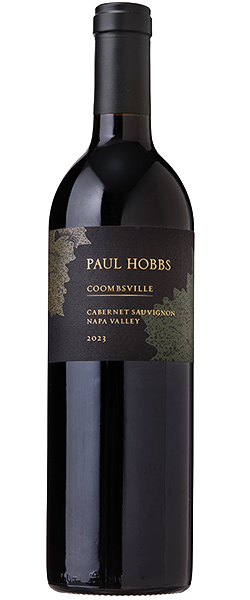
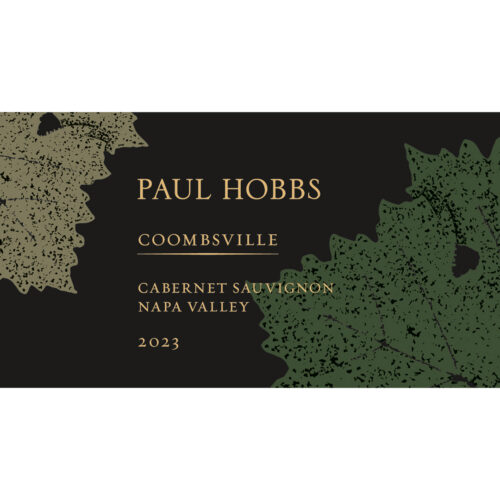
Paul Hobbs Cabernet Sauvignon Coombsville 2023
- Score
- 95
- Price
- $120
- Cases Made
- 8,730
Transitioning from a past rich with heritage to an even brighter future, Napa Valley Cabernet is the Janus of wines. A shining example of its forward-looking face earns our Wine of the Year.
Napa Valley Cabernet Sauvignon enjoyed meteoric success and rapid growth through the 1990s and early 2000s, earning a rightful place among the wine world’s elite for the quality of the wines. At the same time, producers’ reliance on a single overriding profile of powerfully rendered wines, married to rapidly escalating prices, earned detractors. A love/hate relationship developed between wine drinkers and Napa Cabernet. Value bottlings became more difficult to find; some questioned if the wines could age.
For some consumers, the hangover from that period lingers today. But in reality, Napa Valley Cabernet has been going through constant evolution—before, during and after that heady heyday. By embracing a Burgundian approach that focuses on small-production bottlings from numerous single vineyards, the valley’s Cabernet producers have sown the seeds for their next phase. Following the dramatic, phylloxera-driven replants of the late 1980s and early 1990s, they’ve gained valuable experience with their renewed vineyards. They’ve learned lessons in restraint following the years of excess (the rain-plagued 2011 vintage being an inflection point). And with a newfound focus on freshness, delineation and terroir driven by an increasing embrace of holistic, regenerative farming techniques that return the emphasis of winemaking to the vineyard, Napa Cabernet has punched its way through into a new golden era.
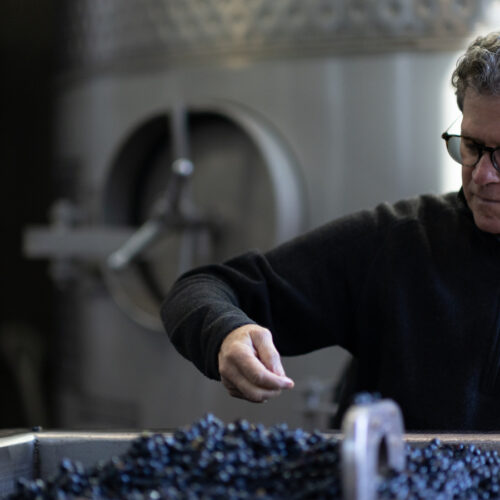
Our 2026 Wine of the Year checks all the boxes among our criteria; there’s a classic 95-point review, a hefty production figure and a price that’s on the lower end for Napa Cabernet. And it achieves all this with a terroir-first style highlighting a breakout AVA, thanks to owner and winemaker Paul Hobbs, who has spent nearly 50 years honing his craft.
Hobbs, 73, grew up on an apple orchard in upstate New York. One night at dinner, his father handed out little paper Dixie cups with a golden-hued liquid in it. As a teenager, that sip of Château d’Yquem sparked Hobbs’ interest in wine.
By 1978 he had graduated from the University of California, Davis, and was working at Robert Mondavi Winery, including on the earliest vintages of Opus One. His career took him up to Alexander Valley’s Simi Winery, then down to Argentina, where he connected with vintner Nicolás Catena. The two would wind up being catalysts for the country’s Malbec boom. From there, Hobbs made stops in Chile, Cahors, Armenia, Uruguay, Canada and even a return to New York with his Finger Lakes Riesling project, Hillick & Hobbs.
California remained his touchstone throughout, though. He debuted his own wines in 1991, with Chardonnay, Pinot Noir and Cabernet bottlings from Larry Hyde’s vineyard among the portfolio. Along the way he consulted on numerous Napa Cabernets and befriended vineyard owner Andy Beckstoffer, a relationship that allowed him in on the ground floor of Beckstoffer’s newly replanted To Kalon parcel, from which he has been making wine for nearly three decades. He cemented his home base when he planted the Katherine Lindsey Vineyard in Sonoma in 2000, adding his own winery facility on the same property in time for the 2003 vintage.
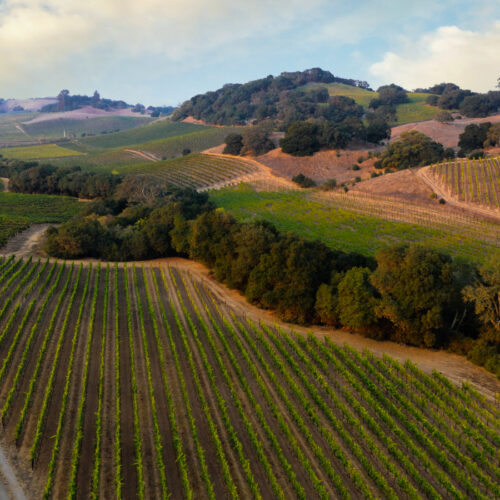
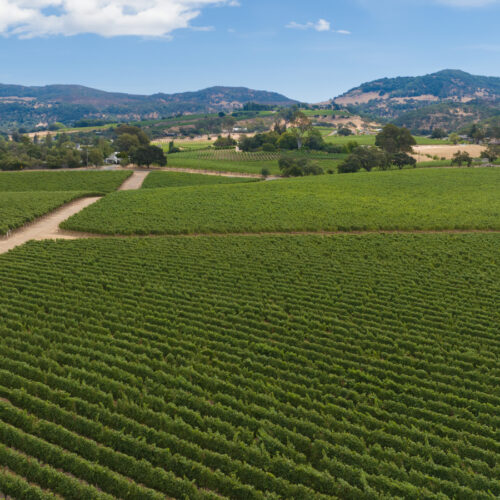
In the 1980s and 1990s, Coombsville, with a decidedly cooler microclimate, earned an insider’s reputation for high quality Cabernet Sauvignon. Wineries that relied on warmer up-valley sites in established areas such as Oakville, for example, would source Coombsville fruit to blend and help balance their wines. As Hobbs got to know the overlooked area, he came across the 60-plus-acre Tourmaline Vineyard, and soon swung a deal to purchase it from its private equity owners in 2012. (Coombsville had earned its AVA status in 2011.) The site had been planted in phases in 2002, 2004 and 2007. Hobbs then budded over sections to rejigger the varietal composition, increasing Cabernet Sauvignon and reducing Merlot. Renamed the Nathan Coombs Estate, it soon became the lynchpin for Hobbs’ Cabernet production. Hobbs’ 2023 bottling includes fruit from the 21-year-old, first-planted parcels on the estate.
Coombsville sits in a caldera that cradles rhyolitic tuff and lava deposits from the volcanic Vaca range of mountains on its flank. Hobbs’ bottling shows a textbook Coombsville profile in the form of winey, black and blue fruit flavors inlaid with cast iron and ink notes. The succulence of the cool, late-running ’23 growing season is also on full display. It’s approachable now, but merits a decade of cellar time to unwind fully.
Hobbs placed a bet on a corner of Napa Valley that hadn’t yet seen the limelight. Now, his experience, efforts and prescience are helping to move Napa Valley Cabernet, the Janus wine, toward a bright future. With his stellar Cabernet Sauvignon Coombsville 2023 as proof, Hobbs and his winery earn our Wine of the Year honor.

Tasting Note
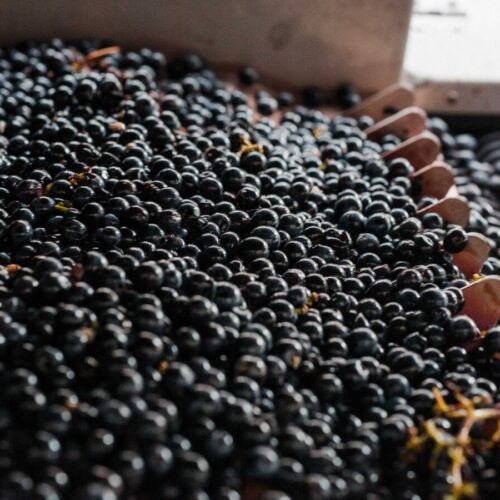
This captures the essence of the vintage wonderfully, with simmering succulence from start to finish that supports alluring açaí, boysenberry and blackberry puree flavors. A cast iron underpinning, along with sparkles of anise, apple wood and ink in the background, combine for impressive range and length. Best from 2027 through 2040. 8,730 cases made.—James Molesworth
- Special Designation:
- Highly Recommended
- Region:
- Napa, California
- Issue Date:
- Oct. 31, 2026